District Five Letting & Project Information


Current Letting and Project Information

2026 Lettings

9. What are the implications of a Rural Designation?

The short of it is there are still federal funding opportunities for rural roads. To follow are examples from our RCI database regarding functional classification and additional funding for rural roads.

RCI Functional Classification information:

Impacts would be determined on a case-by-case basis, but there is potential to lose federal-aid eligibility based on a move from Urban to Rural in some circumstances. For example, if a route goes from an Urban Minor Collector to a Rural Minor Collector, it would lose access to Surface Transportation Block Grant (STBG) Program funds. See the eligible funding categories based on functional classification:
National Highway System - with the exception of NHS Intermodal Connectors or STRAHNET Connectors – must be classified as principal arterials.
Surface Transportation Block Grant (STBG) Program (formerly STP) - Urban Minor Collector or above, Rural Major collector or above and not NHS.

Federal-Aid None (FA-None) - Rural minor collectors or locals and not NHS.
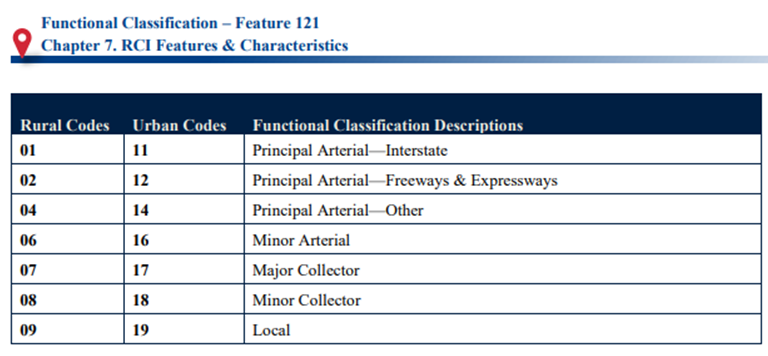
Source: RCI Handbook, Feature 112: https://ftp.fdot.gov/public/file/E0uJxXtAqUuin_4DXW8evA/FDOT_RCI_Handbook_F112.pdf and Feature 121: https://ftp.fdot.gov/public/file/GXLkKNHt80iz6xthSYBbsA/FDOT_RCI_Handbook_F121.pdf

Another consideration is whether your route is on the National Highway Freight Network (NHFN), there are funding opportunities there as well. Feature 116 in RCI details whether a route is part of the NHFN as a primary, non-primary, or  critical urban/rural freight corridor.
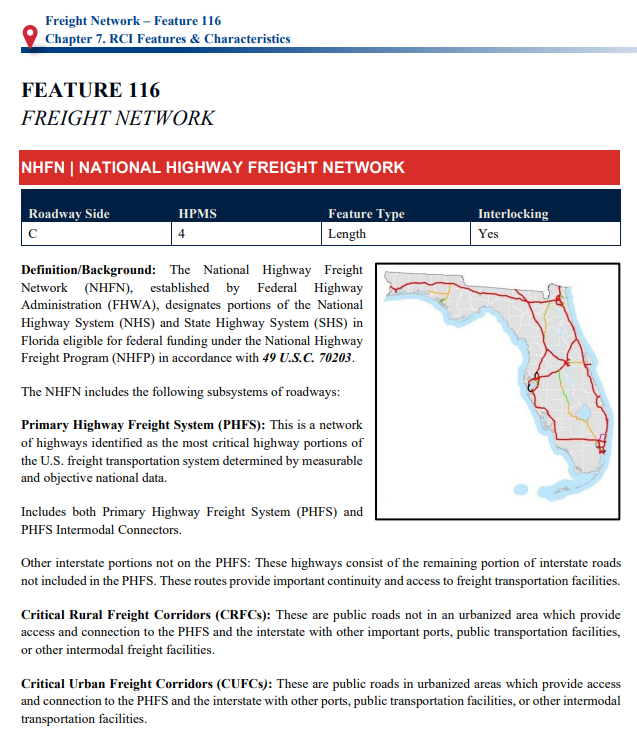
Source: RCI Handbook F116: https://ftp.fdot.gov/public/file/5eia4s0WR0qbJHUua9qrTw/FDOT_RCI_Handbook_F116.pdf

Sean McAuliffe, Manager, Federal Aid Management Office:
Roads in rural areas are still eligible for many different types of federal funds.  

Roads in urban areas rely more upon being prioritized by the local MPO or other planning organizations in the area.

Federal aid eligible roads in Rural areas of the state with a population of less than 5,000 are eligible for the Surface Transportation Block Grant Program, the Carbon Reduction Program, and the Transportation Alternatives Program. Each of these programs have a set-aside specifically for rural areas of the state.  Other eligible improvements with federal funds such as sidewalks are eligible for use on any public road with an appropriate maintenance agreement for work performed off the state highway system.  

Transportation Alternatives (TA) Set-Aside Program

“Consistent with other Federal-aid highway programs, TA funds are administered by the State Department of Transportation (State DOT). The statute requires the following with respect to the selection of projects:

• Funds suballocated to small urban areas and rural areas will be administered by the State. Using a competitive process, the State will select the projects from proposed projects submitted by eligible entities.
• Funds available to any area of the State will be administered by the State. Using a competitive process, the State will select the projects from proposed projects submitted by eligible entities. These funds may be used in any area of the State, including within large urbanized areas, small urban areas, and nonurban areas.
• For the RTP set-aside, if applicable, see the Recreational Trails Program. The "treatment of projects" requirement (23 U.S.C. 133(i)) means that all projects carried out using TA funds (except for recreational trails projects carried out under the RTP set-aside) must comply with applicable provisions in title 23, such as project agreements, authorization to proceed prior to incurring costs, prevailing wage rates (Davis-Bacon), competitive bidding, and other contracting requirements, regardless of whether the projects are located within the right-of-way of a Federal-aid highway.

Under 23 U.S.C. 133(h)(4)(B), the entities eligible to receive TA funds are:
• local governments;
• regional transportation authorities;
• transit agencies;
natural resource or public land agencies; …and
any other local or regional governmental entity with responsibility for oversight of transportation or recreational trails (other than a metropolitan planning organization or a State agency) that the State determines to be eligible, consistent with the goals of subsection (c) of section 213 of title 23. (repealed section of law pointing back to the TA program)

State DOTs and MPOs are not eligible entities as defined under 133(h)(4)(B) and therefore are not eligible project sponsors for TA funds. However, State DOTs and MPOs may partner with an eligible entity project sponsor to carry out a project.

2025 Lettings

9. What are the implications of a Rural Designation?

The short of it is there are still federal funding opportunities for rural roads. To follow are examples from our RCI database regarding functional classification and additional funding for rural roads.

RCI Functional Classification information:

Impacts would be determined on a case-by-case basis, but there is potential to lose federal-aid eligibility based on a move from Urban to Rural in some circumstances. For example, if a route goes from an Urban Minor Collector to a Rural Minor Collector, it would lose access to Surface Transportation Block Grant (STBG) Program funds. See the eligible funding categories based on functional classification:
National Highway System - with the exception of NHS Intermodal Connectors or STRAHNET Connectors – must be classified as principal arterials.
Surface Transportation Block Grant (STBG) Program (formerly STP) - Urban Minor Collector or above, Rural Major collector or above and not NHS.

Federal-Aid None (FA-None) - Rural minor collectors or locals and not NHS.

Source: RCI Handbook, Feature 112: https://ftp.fdot.gov/public/file/E0uJxXtAqUuin_4DXW8evA/FDOT_RCI_Handbook_F112.pdf and Feature 121: https://ftp.fdot.gov/public/file/GXLkKNHt80iz6xthSYBbsA/FDOT_RCI_Handbook_F121.pdf

Another consideration is whether your route is on the National Highway Freight Network (NHFN), there are funding opportunities there as well. Feature 116 in RCI details whether a route is part of the NHFN as a primary, non-primary, or  critical urban/rural freight corridor.
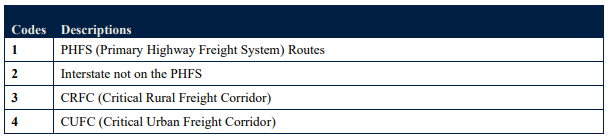
Source: RCI Handbook F116: https://ftp.fdot.gov/public/file/5eia4s0WR0qbJHUua9qrTw/FDOT_RCI_Handbook_F116.pdf

Sean McAuliffe, Manager, Federal Aid Management Office:
Roads in rural areas are still eligible for many different types of federal funds.  

Roads in urban areas rely more upon being prioritized by the local MPO or other planning organizations in the area.

Federal aid eligible roads in Rural areas of the state with a population of less than 5,000 are eligible for the Surface Transportation Block Grant Program, the Carbon Reduction Program, and the Transportation Alternatives Program. Each of these programs have a set-aside specifically for rural areas of the state.  Other eligible improvements with federal funds such as sidewalks are eligible for use on any public road with an appropriate maintenance agreement for work performed off the state highway system.  

Transportation Alternatives (TA) Set-Aside Program

“Consistent with other Federal-aid highway programs, TA funds are administered by the State Department of Transportation (State DOT). The statute requires the following with respect to the selection of projects:

• Funds suballocated to small urban areas and rural areas will be administered by the State. Using a competitive process, the State will select the projects from proposed projects submitted by eligible entities.
• Funds available to any area of the State will be administered by the State. Using a competitive process, the State will select the projects from proposed projects submitted by eligible entities. These funds may be used in any area of the State, including within large urbanized areas, small urban areas, and nonurban areas.
• For the RTP set-aside, if applicable, see the Recreational Trails Program. The "treatment of projects" requirement (23 U.S.C. 133(i)) means that all projects carried out using TA funds (except for recreational trails projects carried out under the RTP set-aside) must comply with applicable provisions in title 23, such as project agreements, authorization to proceed prior to incurring costs, prevailing wage rates (Davis-Bacon), competitive bidding, and other contracting requirements, regardless of whether the projects are located within the right-of-way of a Federal-aid highway.

Under 23 U.S.C. 133(h)(4)(B), the entities eligible to receive TA funds are:
• local governments;
• regional transportation authorities;
• transit agencies;
natural resource or public land agencies; …and
any other local or regional governmental entity with responsibility for oversight of transportation or recreational trails (other than a metropolitan planning organization or a State agency) that the State determines to be eligible, consistent with the goals of subsection (c) of section 213 of title 23. (repealed section of law pointing back to the TA program)

State DOTs and MPOs are not eligible entities as defined under 133(h)(4)(B) and therefore are not eligible project sponsors for TA funds. However, State DOTs and MPOs may partner with an eligible entity project sponsor to carry out a project.


2025 Award & Posting / Bid Tabulations

9. What are the implications of a Rural Designation?

The short of it is there are still federal funding opportunities for rural roads. To follow are examples from our RCI database regarding functional classification and additional funding for rural roads.

RCI Functional Classification information:

Impacts would be determined on a case-by-case basis, but there is potential to lose federal-aid eligibility based on a move from Urban to Rural in some circumstances. For example, if a route goes from an Urban Minor Collector to a Rural Minor Collector, it would lose access to Surface Transportation Block Grant (STBG) Program funds. See the eligible funding categories based on functional classification:
National Highway System - with the exception of NHS Intermodal Connectors or STRAHNET Connectors – must be classified as principal arterials.
Surface Transportation Block Grant (STBG) Program (formerly STP) - Urban Minor Collector or above, Rural Major collector or above and not NHS.

Federal-Aid None (FA-None) - Rural minor collectors or locals and not NHS.

Source: RCI Handbook, Feature 112: https://ftp.fdot.gov/public/file/E0uJxXtAqUuin_4DXW8evA/FDOT_RCI_Handbook_F112.pdf and Feature 121: https://ftp.fdot.gov/public/file/GXLkKNHt80iz6xthSYBbsA/FDOT_RCI_Handbook_F121.pdf

Another consideration is whether your route is on the National Highway Freight Network (NHFN), there are funding opportunities there as well. Feature 116 in RCI details whether a route is part of the NHFN as a primary, non-primary, or  critical urban/rural freight corridor.

Source: RCI Handbook F116: https://ftp.fdot.gov/public/file/5eia4s0WR0qbJHUua9qrTw/FDOT_RCI_Handbook_F116.pdf

Sean McAuliffe, Manager, Federal Aid Management Office:
Roads in rural areas are still eligible for many different types of federal funds.  

Roads in urban areas rely more upon being prioritized by the local MPO or other planning organizations in the area.

Federal aid eligible roads in Rural areas of the state with a population of less than 5,000 are eligible for the Surface Transportation Block Grant Program, the Carbon Reduction Program, and the Transportation Alternatives Program. Each of these programs have a set-aside specifically for rural areas of the state.  Other eligible improvements with federal funds such as sidewalks are eligible for use on any public road with an appropriate maintenance agreement for work performed off the state highway system.  

Transportation Alternatives (TA) Set-Aside Program

“Consistent with other Federal-aid highway programs, TA funds are administered by the State Department of Transportation (State DOT). The statute requires the following with respect to the selection of projects:

• Funds suballocated to small urban areas and rural areas will be administered by the State. Using a competitive process, the State will select the projects from proposed projects submitted by eligible entities.
• Funds available to any area of the State will be administered by the State. Using a competitive process, the State will select the projects from proposed projects submitted by eligible entities. These funds may be used in any area of the State, including within large urbanized areas, small urban areas, and nonurban areas.
• For the RTP set-aside, if applicable, see the Recreational Trails Program. The "treatment of projects" requirement (23 U.S.C. 133(i)) means that all projects carried out using TA funds (except for recreational trails projects carried out under the RTP set-aside) must comply with applicable provisions in title 23, such as project agreements, authorization to proceed prior to incurring costs, prevailing wage rates (Davis-Bacon), competitive bidding, and other contracting requirements, regardless of whether the projects are located within the right-of-way of a Federal-aid highway.

Under 23 U.S.C. 133(h)(4)(B), the entities eligible to receive TA funds are:
• local governments;
• regional transportation authorities;
• transit agencies;
natural resource or public land agencies; …and
any other local or regional governmental entity with responsibility for oversight of transportation or recreational trails (other than a metropolitan planning organization or a State agency) that the State determines to be eligible, consistent with the goals of subsection (c) of section 213 of title 23. (repealed section of law pointing back to the TA program)

State DOTs and MPOs are not eligible entities as defined under 133(h)(4)(B) and therefore are not eligible project sponsors for TA funds. However, State DOTs and MPOs may partner with an eligible entity project sponsor to carry out a project.


Previous Lettings

2024 Letting Information:  Letting, Project, Addenda, Award & Posting Information

2023 Letting Information:  Letting, Project, Addenda, Award & Posting Information

2022 Letting Information:  Letting, Project, Addenda, Award & Posting Information

2021 Letting Information:  Letting, Project, Addenda, Award & Posting Information

2020 Letting Information:  Letting, Project, Addenda, Award & Posting Information

2019 Letting Information:  Letting, Project, Addenda, Award & Posting Information

2018 Letting Information:  Letting, Project, Addenda, Award & Posting Information


Addenda & Amendments

Contractors will be notified of all Amendments and are required to download the Amendments from the  CPP Online Ordering System per these instructions: Amendment Instructions (PDF)

Amendment files can be downloaded by clicking on the links.  Amendments must be downloaded to the location of your original EBS file prior to preparing the bid.


If you do not have Acrobat Reader you can download it free at Get Acrobat Reader.

9. What are the implications of a Rural Designation?

The short of it is there are still federal funding opportunities for rural roads. To follow are examples from our RCI database regarding functional classification and additional funding for rural roads.

RCI Functional Classification information:

Impacts would be determined on a case-by-case basis, but there is potential to lose federal-aid eligibility based on a move from Urban to Rural in some circumstances. For example, if a route goes from an Urban Minor Collector to a Rural Minor Collector, it would lose access to Surface Transportation Block Grant (STBG) Program funds. See the eligible funding categories based on functional classification:
National Highway System - with the exception of NHS Intermodal Connectors or STRAHNET Connectors – must be classified as principal arterials.
Surface Transportation Block Grant (STBG) Program (formerly STP) - Urban Minor Collector or above, Rural Major collector or above and not NHS.

Federal-Aid None (FA-None) - Rural minor collectors or locals and not NHS.

Source: RCI Handbook, Feature 112: https://ftp.fdot.gov/public/file/E0uJxXtAqUuin_4DXW8evA/FDOT_RCI_Handbook_F112.pdf and Feature 121: https://ftp.fdot.gov/public/file/GXLkKNHt80iz6xthSYBbsA/FDOT_RCI_Handbook_F121.pdf

Another consideration is whether your route is on the National Highway Freight Network (NHFN), there are funding opportunities there as well. Feature 116 in RCI details whether a route is part of the NHFN as a primary, non-primary, or  critical urban/rural freight corridor.

Source: RCI Handbook F116: https://ftp.fdot.gov/public/file/5eia4s0WR0qbJHUua9qrTw/FDOT_RCI_Handbook_F116.pdf

Sean McAuliffe, Manager, Federal Aid Management Office:
Roads in rural areas are still eligible for many different types of federal funds.  

Roads in urban areas rely more upon being prioritized by the local MPO or other planning organizations in the area.

Federal aid eligible roads in Rural areas of the state with a population of less than 5,000 are eligible for the Surface Transportation Block Grant Program, the Carbon Reduction Program, and the Transportation Alternatives Program. Each of these programs have a set-aside specifically for rural areas of the state.  Other eligible improvements with federal funds such as sidewalks are eligible for use on any public road with an appropriate maintenance agreement for work performed off the state highway system.  

Transportation Alternatives (TA) Set-Aside Program

“Consistent with other Federal-aid highway programs, TA funds are administered by the State Department of Transportation (State DOT). The statute requires the following with respect to the selection of projects:

• Funds suballocated to small urban areas and rural areas will be administered by the State. Using a competitive process, the State will select the projects from proposed projects submitted by eligible entities.
• Funds available to any area of the State will be administered by the State. Using a competitive process, the State will select the projects from proposed projects submitted by eligible entities. These funds may be used in any area of the State, including within large urbanized areas, small urban areas, and nonurban areas.
• For the RTP set-aside, if applicable, see the Recreational Trails Program. The "treatment of projects" requirement (23 U.S.C. 133(i)) means that all projects carried out using TA funds (except for recreational trails projects carried out under the RTP set-aside) must comply with applicable provisions in title 23, such as project agreements, authorization to proceed prior to incurring costs, prevailing wage rates (Davis-Bacon), competitive bidding, and other contracting requirements, regardless of whether the projects are located within the right-of-way of a Federal-aid highway.

Under 23 U.S.C. 133(h)(4)(B), the entities eligible to receive TA funds are:
• local governments;
• regional transportation authorities;
• transit agencies;
natural resource or public land agencies; …and
any other local or regional governmental entity with responsibility for oversight of transportation or recreational trails (other than a metropolitan planning organization or a State agency) that the State determines to be eligible, consistent with the goals of subsection (c) of section 213 of title 23. (repealed section of law pointing back to the TA program)

State DOTs and MPOs are not eligible entities as defined under 133(h)(4)(B) and therefore are not eligible project sponsors for TA funds. However, State DOTs and MPOs may partner with an eligible entity project sponsor to carry out a project.